A significant portion of Southern Illinois history revolves around the Native Americans, their daily lives, their art and the tragedy of the forced migration known as the Trail of Tears. Want to explore more? Consider this daytrip.
This perfect Southern Illinois daytrip begins at the historic Davie School Inn in Anna, Illinois. Leaving the quiet streets of Anna in the early morning, the countryside quickly unfolds into rolling farmland and wooded ridges. The Shawnee Hills rise gently in the distance, promising a day filled with scenic overlooks, deep forests, and meaningful history tied to the land.
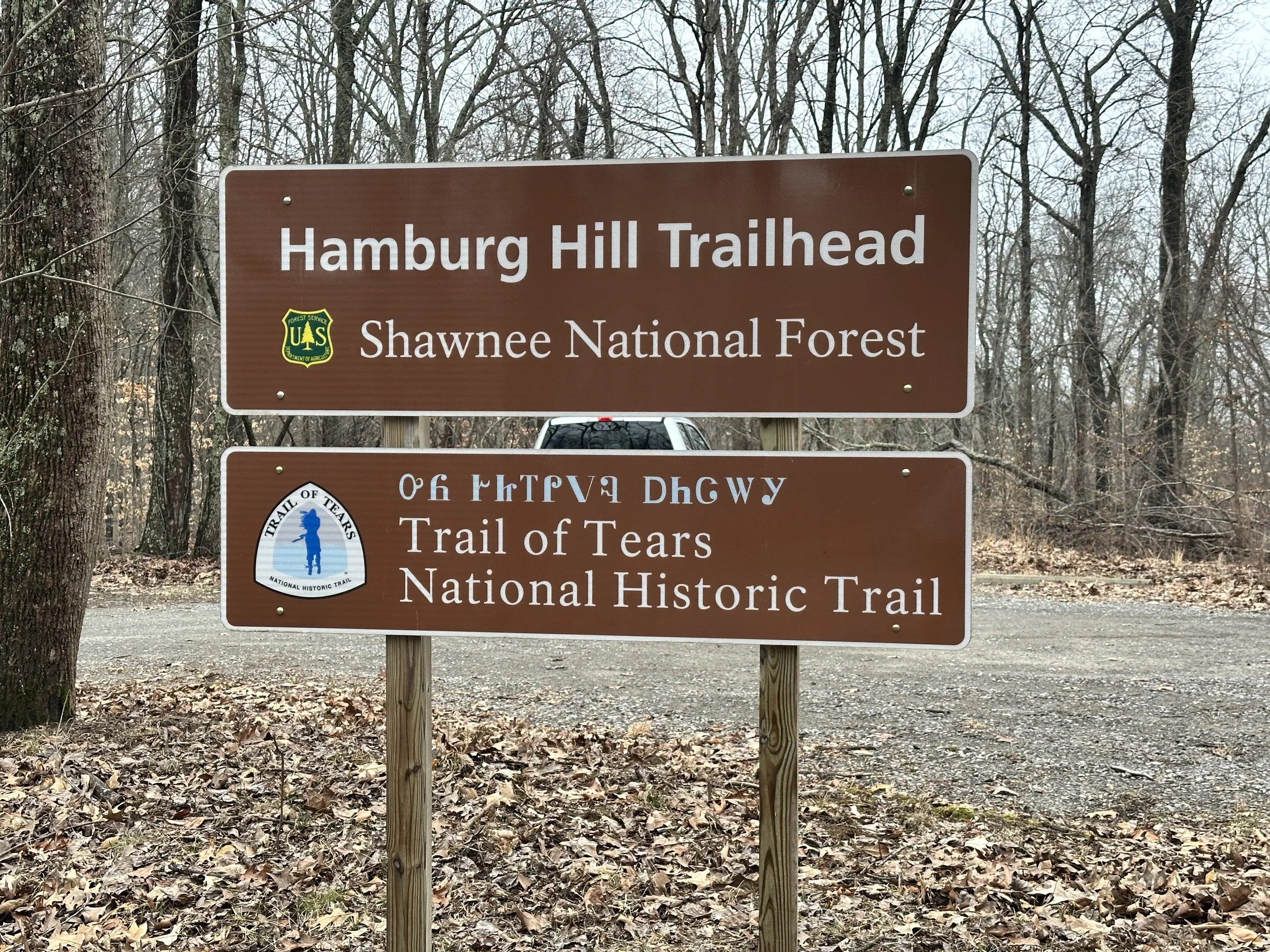
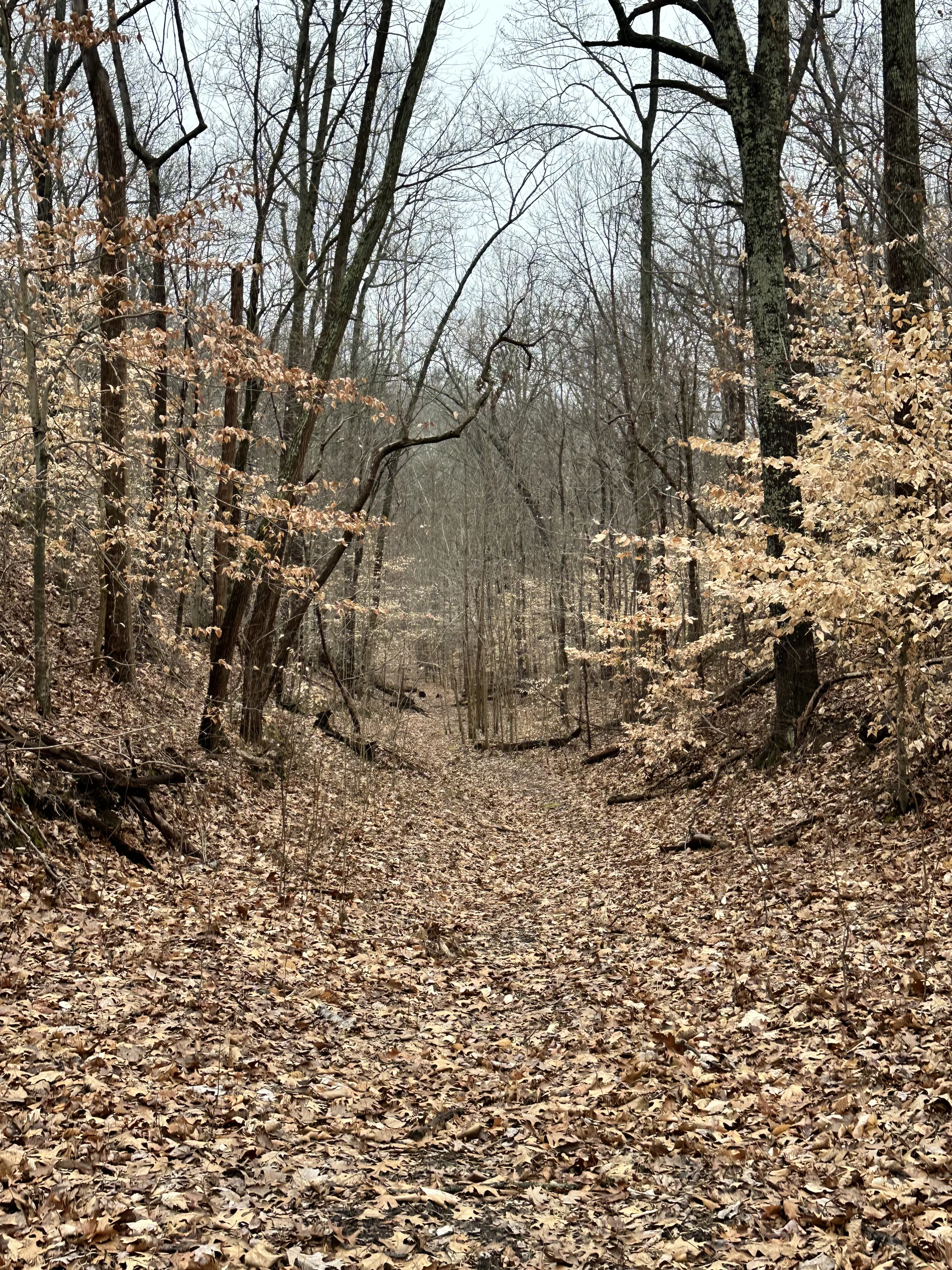
The first destination is Hamburg Hill, one of the most poignant segments of the Trail of Tears in Illinois. Here, a preserved portion of the route followed by Cherokee detachments in the winter of 1838–1839 winds across wooded slopes. Walking the trail invites quiet reflection; interpretive signs describe the harsh conditions endured during forced removal. If you look just so you can see the wheel ruts of the wagons from the day. The landscape feels peaceful today—birds call from the trees and deer, wild turkey and squirrels graze about—but the story beneath your feet carries solemn weight, reminding visitors of the thousands who passed through this very corridor on their way west.
From Hamburg Hill, the drive continues toward Jonesboro and into Trail of Tears State Forest. The road curves gently through dense stands of oak and hickory, dipping into shaded hollows and climbing along ridgelines that offer filtered views of the forest canopy. In autumn, the hills blaze with reds and golds; in spring and summer, the greenery feels almost tunnel-like as sunlight flickers across the windshield. The quiet isolation of this stretch of road makes it easy to imagine the region as it once was—vast, rugged, and largely untamed.
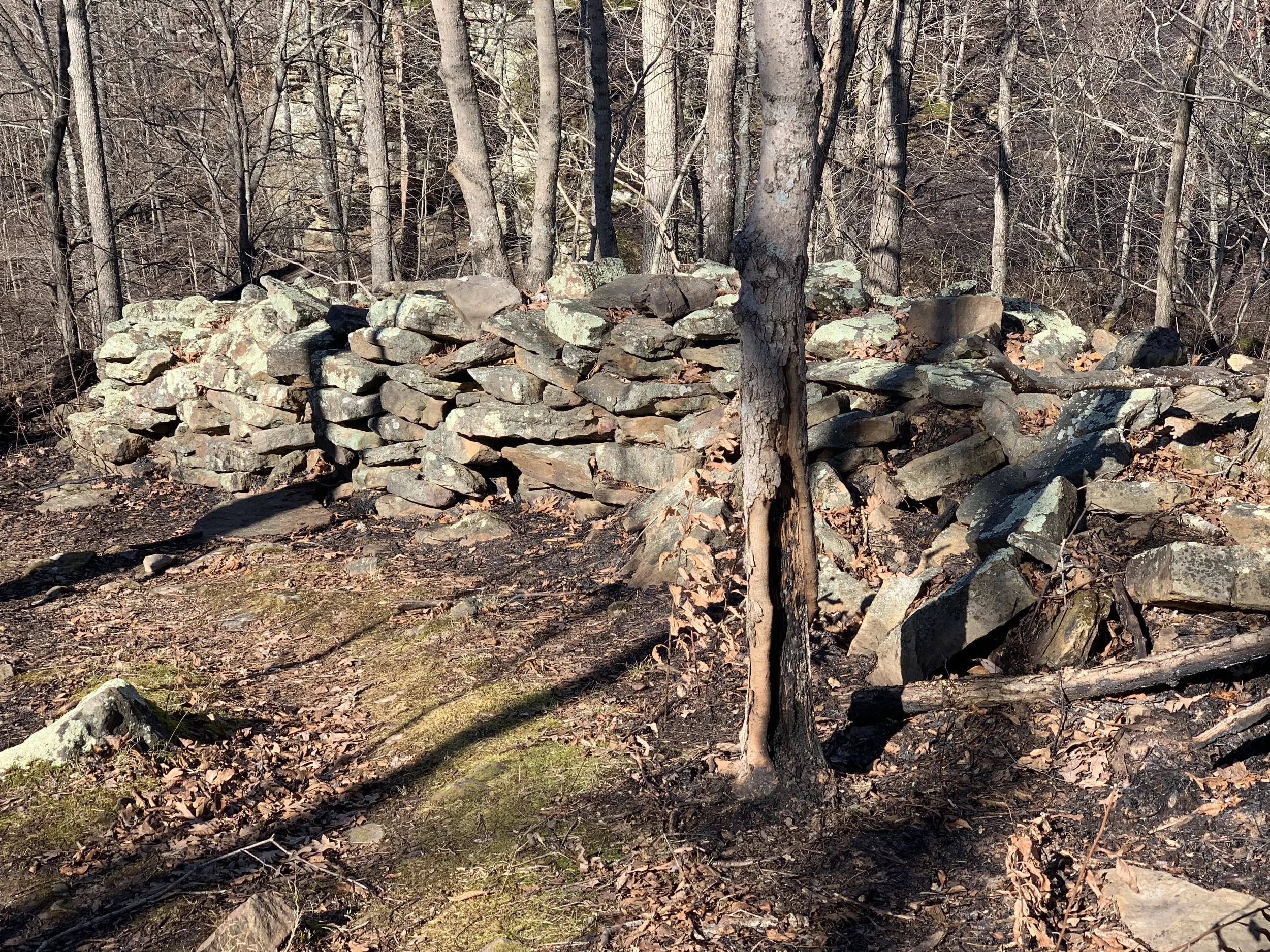
A short drive east leads to Giant City State Park, where the Stone Fort Trail offers one of Southern Illinois' most iconic hikes. Massive sandstone bluffs rise dramatically from the forest floor, forming narrow passageways that feel like natural corridors carved by time. The one-mile loop circles an ancient Native American Woodland-period stone structure atop the bluff, believed to have ceremonial significance. Moss-covered rock walls, towering formations, and cool, shaded paths make the hike both invigorating and visually stunning.
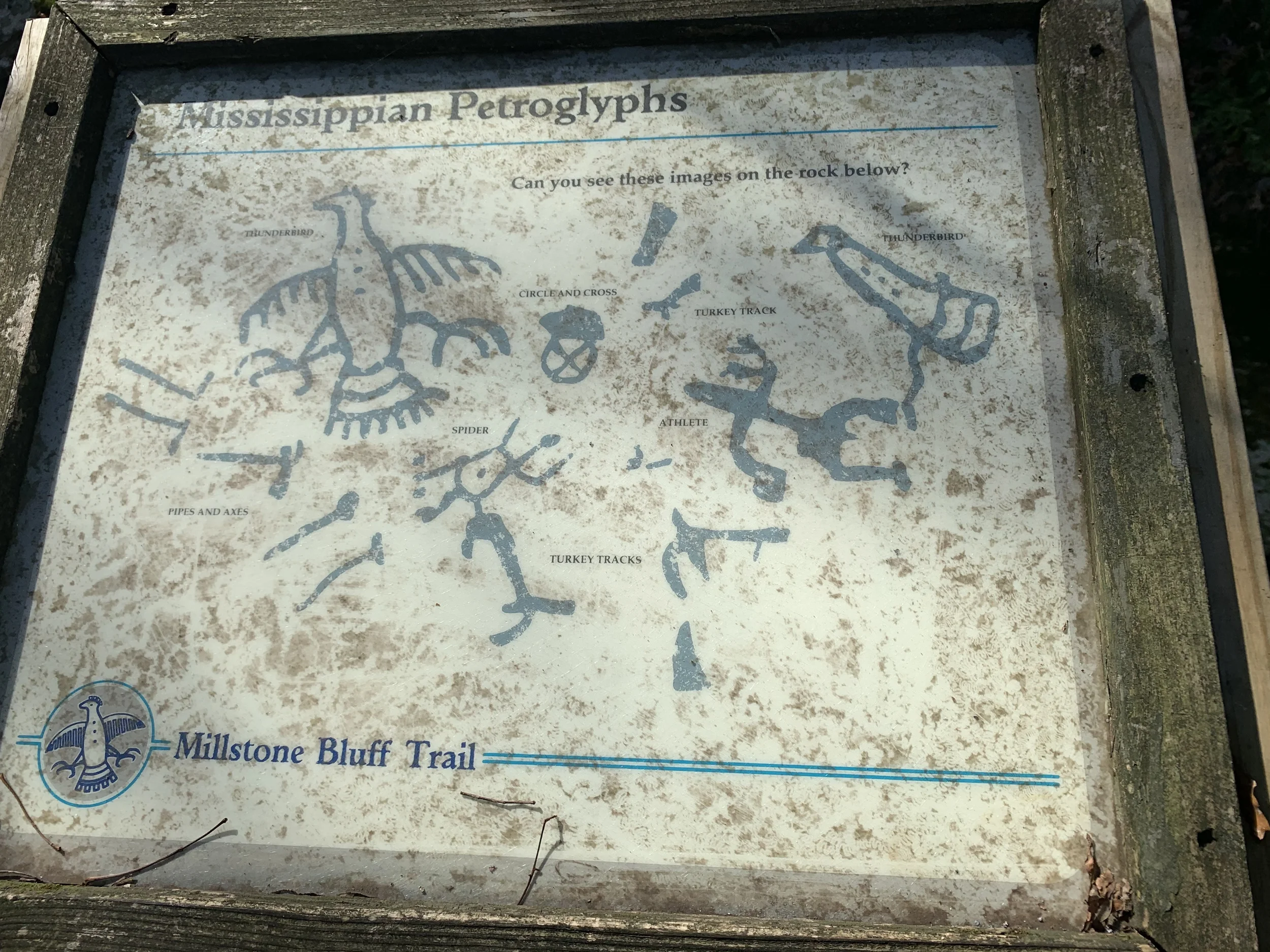
Continuing south and east brings you to Millstone Bluff, a remarkable archaeological and scenic site overlooking the Mississippi and Ohio River valleys. A moderate climb leads to the bluff top, where remnants of a prehistoric Native American village are still visible—stone tools, house outlines, and burial mounds hint at life centuries ago. Interpretive panels explain the Mississippian culture that once flourished here. The panoramic views from the bluff are breathtaking, stretching across forested lowlands and distant river corridors.
From there, the journey turns east toward Golconda along the Ohio River, where more chapters of Trail of Tears history unfolded. Golconda served as a river crossing point for Cherokee detachments heading west. At Old Trovillion Cemetery, a Trail of Tears marker commemorates those who passed through the area during the winter march. Standing beside the marker, overlooking the quiet river landscape, it is difficult not to feel the weight of history. The river flows calmly today, but in 1838 it marked a critical, frozen and uncertain crossing for families forced from their homeland.
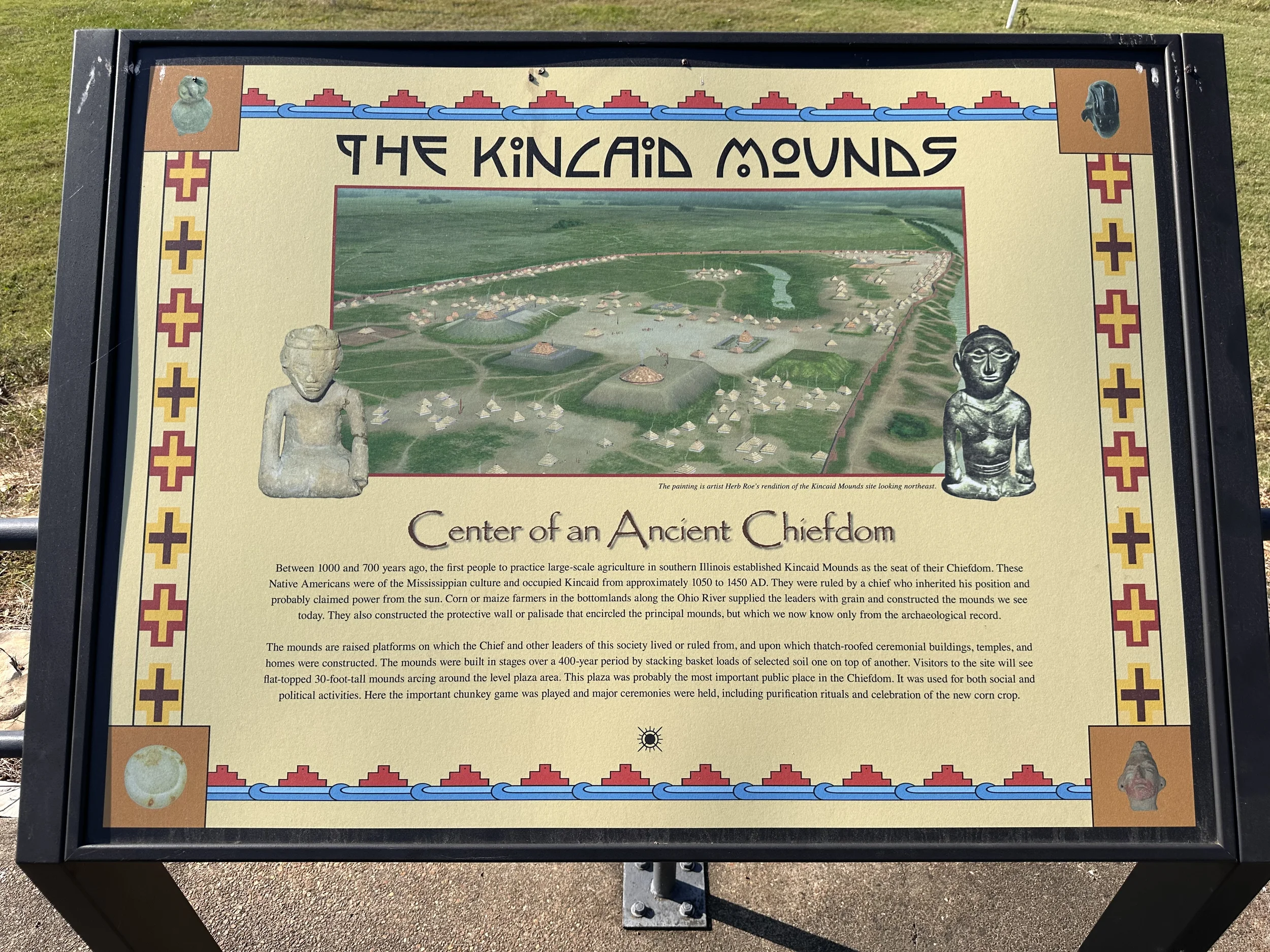
The final stop of the day, a bit further to the south, is Kincaid Mounds State Historic Site near Brookport. This expansive archaeological site preserves the remains of a significant Mississippian ceremonial center, complete with platform mounds and a central plaza. Walking among the grassy mounds at sunset provides a powerful reminder that Southern Illinois has long been home to vibrant Native cultures. As evening settles in, the drive back to Davie School Inn brings the day full circle. The familiar brick façade glows warmly in the fading light, offering a peaceful return after a day spent exploring landscapes rich with beauty, reflection, and deep historical meaning.